Cherry Lane Cemetery
Site Brief:
Founded: 1850
Location: Staten Island, NY
Additional name(s): Cherry Lane Cemetery
Affiliate group(s):
Second Asbury AME Zion Church
NYGenWeb
Northeast Corridor Freedom Network, Inc.
Canvasback Kid Productions, LLC
History:
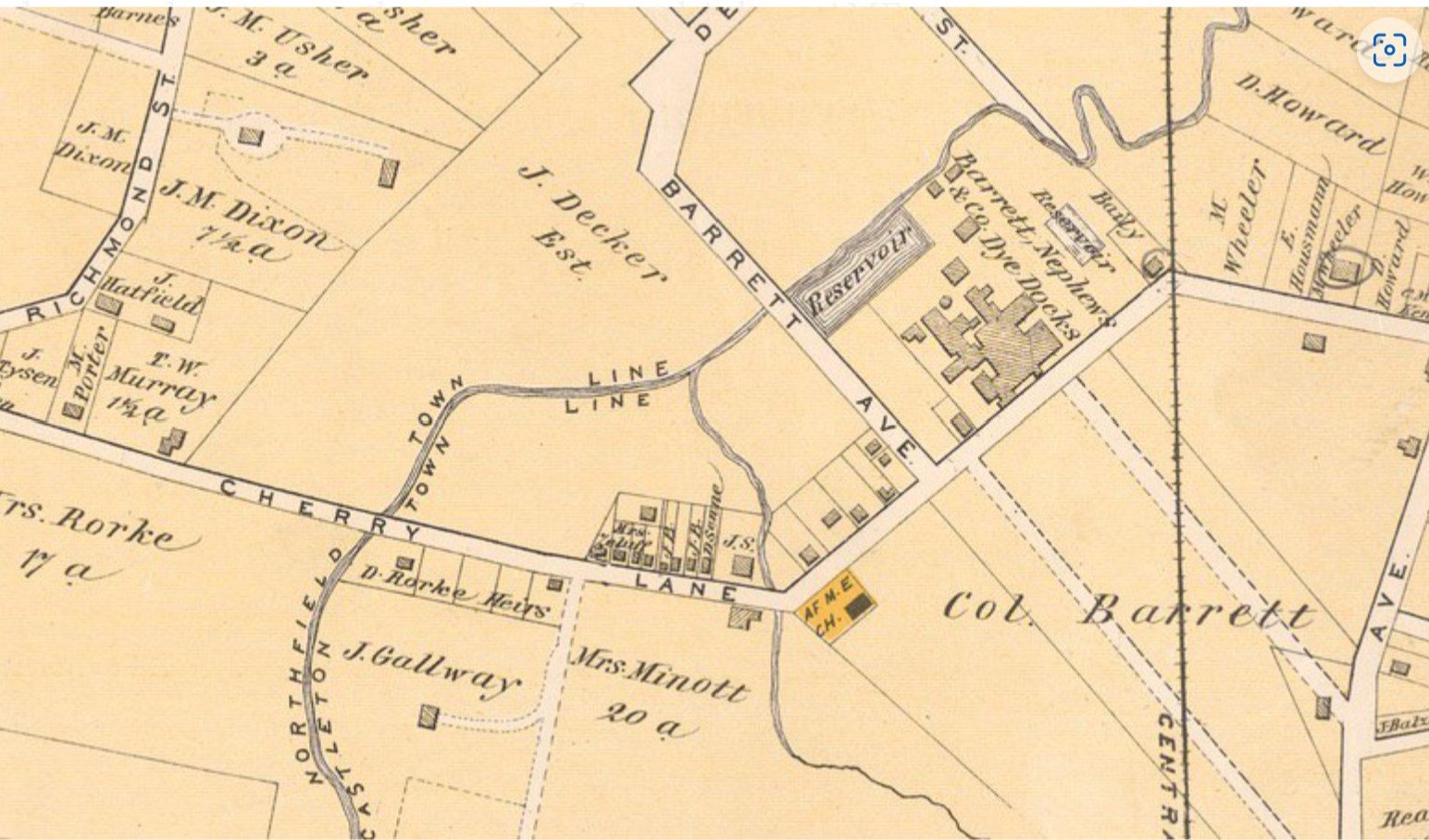
The Second Asbury AME Zion Church was built c. 1855 on Cherry Lane in Staten Island, New York. Its congregation included families with roots in New York, New Jersey, Maryland, and Virginia. Census records identify community members as oystermen, steamboat stewardesses, laborers, dockworkers, and miners. Family names associated with the congregation and cemetery include DeHart, Prine, Lawrence, Purnell, Landin, Morris, Bush, and Crowley.
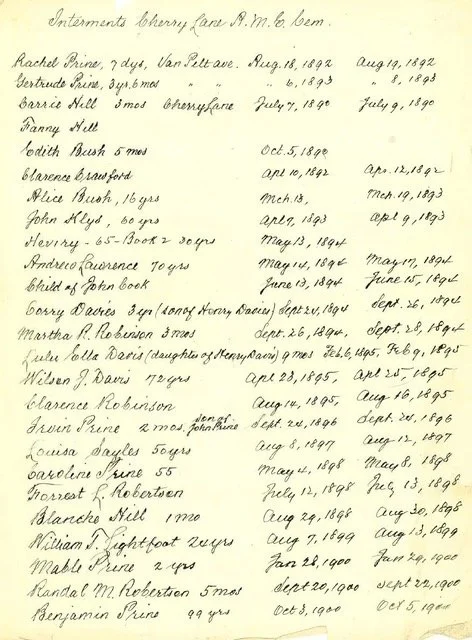
The church property also served as a burial ground, commonly known as Cherry Lane Cemetery. Any headstones, crosses, or other markers that may once have identified the graves were later destroyed. An estimated 1,000 people—including infants and children—were buried there. To date, 59 individuals have been documented through death certificates, obituaries, and other historical records. The Second Asbury church is believed to have been destroyed by vandals during the 1880s. At that point, however, the property was being used primarily as a cemetery. Among the interred was Benjamin Prine, who had been enslaved on Staten Island and was believed to be the island’s oldest formerly enslaved resident at the time of his death in 1900. He was so well regarded that his obituary appeared in The New York Times, The Boston Globe, and the Chicago Tribune. Tax rolls from 1908 show that New York City recognized Cherry Lane as a tax-exempt cemetery. The property was nevertheless later included within a commercially zoned area.
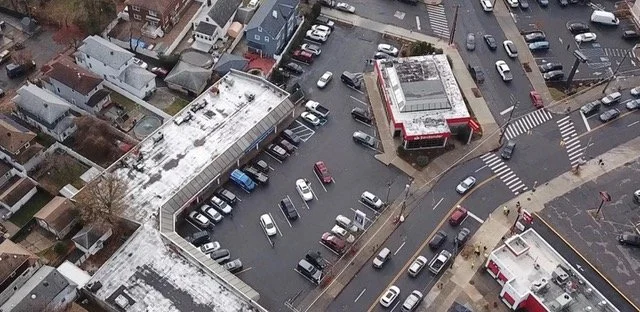
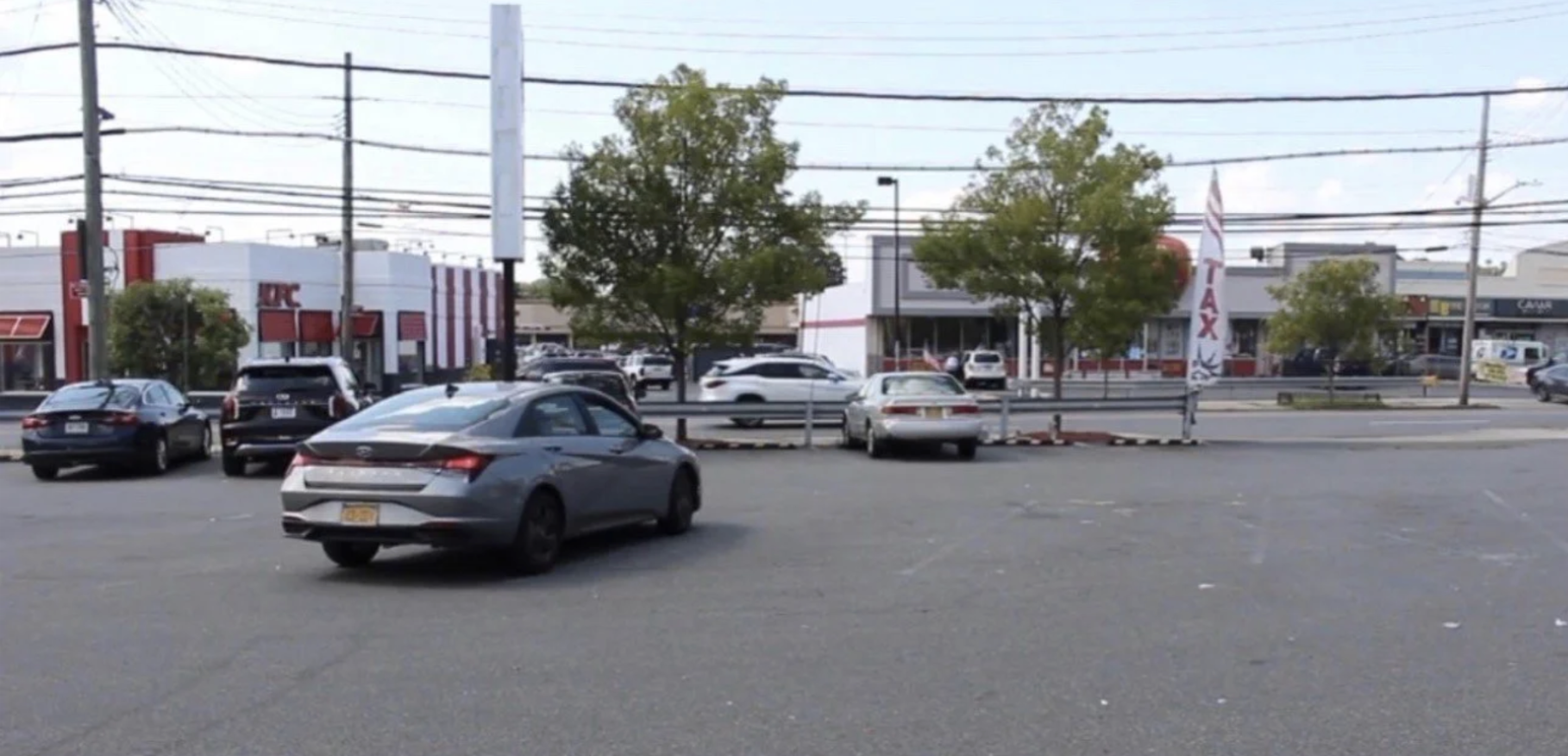
During the 1950s, the city sued the cemetery’s trustees for more than $16,000 in back taxes, arguing that the deed did not explicitly authorize the property’s use as either a church or a cemetery. Unable to pay the judgment, the trustees lost the property at auction in 1954. It was sold for $1,000 to the Menden family, who were involved in commercial development across Staten Island. A subsequent quitclaim deed proceeding concluded that Cherry Lane had never legally been a cemetery. As a result, no effort was made to reinter the remains before the property was commercially developed—first as a Shell station, now as a strip mall. While their present location is unknown, a ground-penetrating radar investigation is underway to determine whether burials may remain beneath the former cemetery site.
In 2023, a street running alongside the former cemetery was co-named Benjamin Prine Way. It is the only street in New York City co-named in honor of a person who was enslaved in the city. A memorial garden now also stands on the site in recognition of Cherry Lane Cemetery and the community whose burial ground was erased.