SITE DIRECTORY
To learn more about any of the BCN sites listed below, click “Read more” to view individual site briefs. To search for a specific BCN site, use the search bar below:
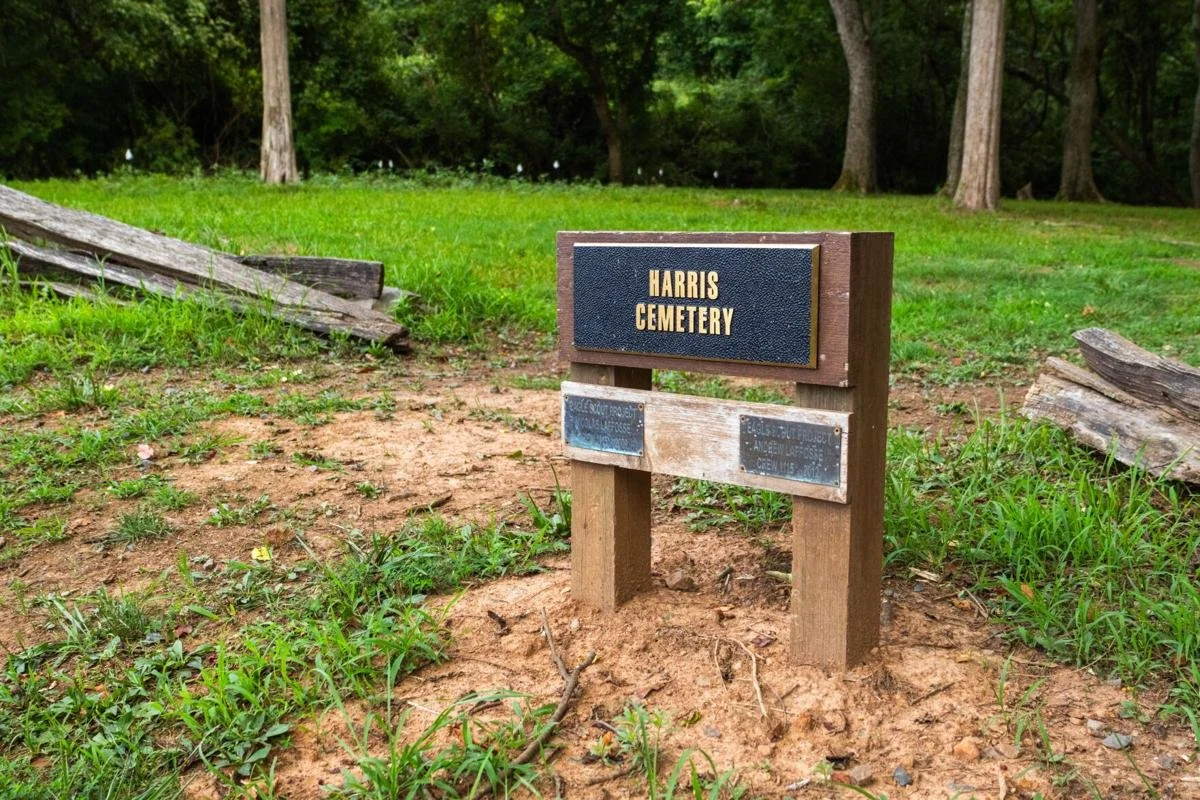
Bull Run African American Cemetery
Bull Run African American Cemetery
FOUNDED: Late 1700s
ADDITIONAL NAMES: Harris Family Cemetery
AFFILIATION(S):
NOVA Parks
Fairfax County NAACP
Fairfax NAACP Religious Affairs Committee
HISTORY: The Bull Run African American Cemetery is located in Centreville, Virginia, within Fairfax County. Dating back to the 18th century, the cemetery lies inside Bull Run Regional Park. Ground-penetrating radar conducted by NOVA Parks has confirmed 101 unmarker burials of both enslaved and freed African Americans. The land on which the cemetery sits was once part of Leo Plantation, inherited by Robert Carter III, who went on to become one of the wealthiest men in Virginia at the time. Influenced by Baptist teachings and the beliefs of those he enslaved, Carter eventually turned away from the Anglican Church and its support of slavery. The Bull Run Baptist Meeting House was established by Carter III in 1775, which historical records indicate was located near the cemetery and open to enslaved and free worshippers. The congregation was likely majority Black. Carter's oldest son was buried within or near the cemetery after his death in 1779.
In 1791, Robert Carter III signed a Deed of Gift to begin the gradual manumission of those he enslaved. Eventually, more than 500 men, women, and children were freed, and Carter provided opportunities for them to acquire land, education, and resources to establish independent lives. Many formerly enslaved people and their descendants remained in the Bull Run area, forming a free Black community that included the Harris family, whose ancestors lived on the land and are buried at the cemetery. Over time, much of the history of the cemetery and the community connected to it was largely forgotten outside of the families who preserved and passed down their stories through generations. Since 2022, NOVA Parks and the Fairfax County NAACP have held an annual Juneteenth event to recognize this history and commemorate the largest individual emancipation of enslaved people prior to the Emancipation Proclamation. Today, ongoing research and preservation efforts are helping document the cemetery’s history, improve access to the site, and ensure that the stories of the people buried there and their descendants are preserved, remembered, and shared with future generations.
BCN Contact Information:
Megan Schuster (Park Manager for Bull Run Regional Park)

Booker T. Washington Cemetery
BOOKER T. WASHINGTON CEMETERY
FOUNDED: 1919
ADDITONAL NAMES: Washington Cemetery; Booker Washington Cemetery
AFFILIATION(S): N/A
HISTORY:
Booker T. Washington Cemetery is located off Illinois Route 163 (aka Millstadt Road) near the intersection with Illinois Route 157 in Cahokia Heights (formerly Centreville), Illinois. The cemetery is also known as Booker Washington Cemetery and Washington Cemetery. The cemetery was founded by Russie McCullen “R.M.C.” Green, an African American undertaker, on September 10, 1919. A plat of the cemetery dated January 30, 1920, contained 9 sections and 548 lots, and was recorded by the St. Clair County Recorder on March 17, 1920. An addition to the cemetery was platted in November 1966 by Gertrude A. (Hudson) Green, daughter-in-law of the founder and spouse of Edgar H. Green (son of R.M.C).
The cemetery did not have a perpetual care program for the graves. The present ownership of this cemetery is unknown. The cemetery is in poor condition and has been for decades. Weeds cover the graves. The property suffers from flooding, criminal activity, and illegal dumping. Booker T. Washington Cemetery is the final resting place for more than 12,000 African Americans including freed slaves, military veterans, and prominent East St. Louis residents.
BCN Contact Information:
St. Clair County Genealogical Society
sccgsoffice@stclair-ilgs.org