SITE DIRECTORY
To learn more about any of the BCN sites listed below, click “Read more” to view individual site briefs. To search for a specific BCN site, use the search bar below:
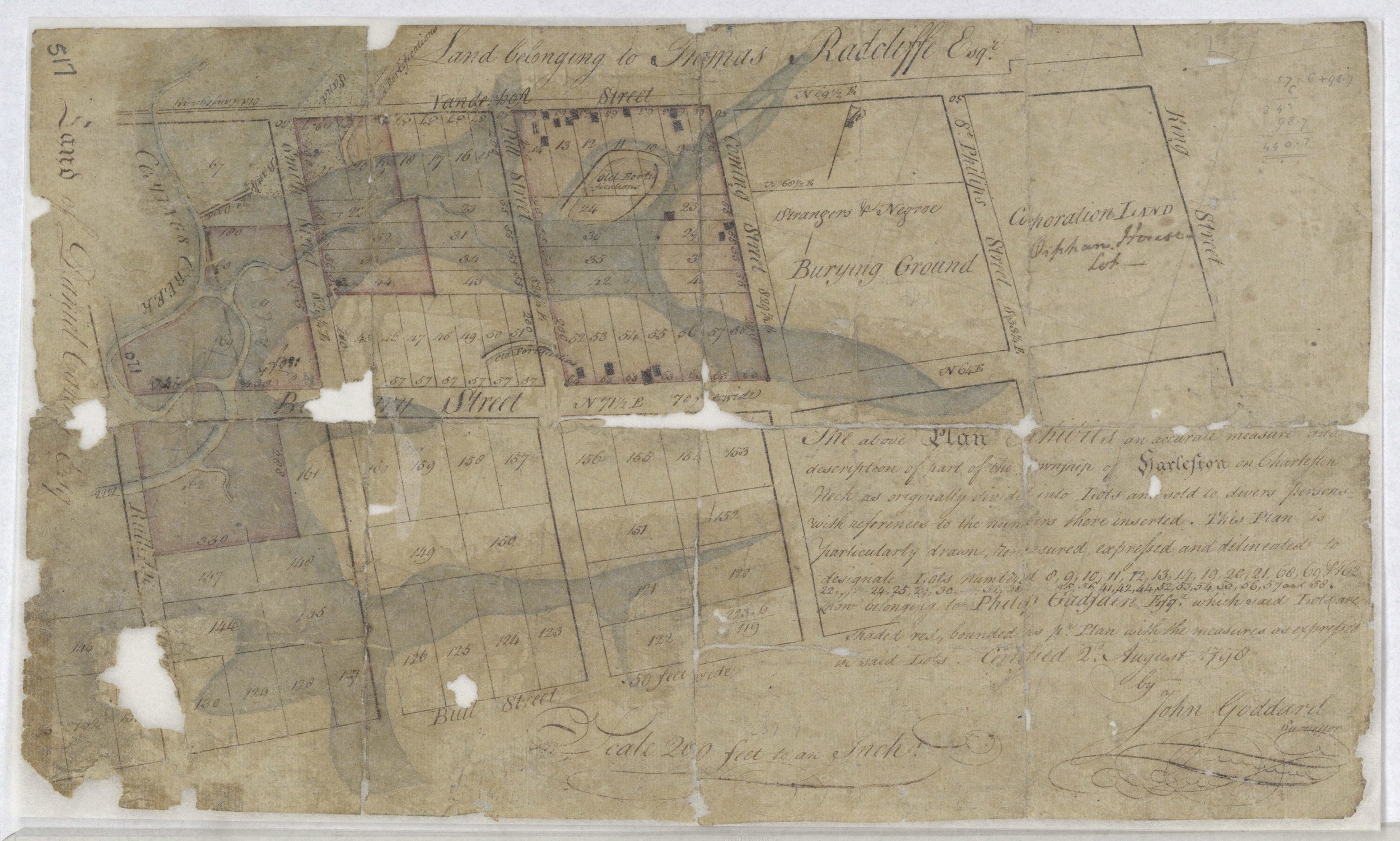
Coming Street Cemetery
Coming Street Cemetery
FOUNDED: 1794
ADDITIONAL NAMES: Strangers & Negroes Public Burying Ground, 106 Coming Street Cemetery
AFFILIATION(S): Preservation Society of Charleston, Protect and Respect the Bodies Coalition
HISTORY: Between 1794 and 1807, the City of Charleston operated a public burial ground on Calhoun Street between Coming and St. Philip Streets, where many of the city’s most vulnerable residents were laid to rest. Those interred included poor adults, children, and enslaved individuals who could not afford or access other cemeteries, including captured Africans who did not survive the Transatlantic Slave Trade. The burial ground was in use for just thirteen years before reaching capacity, a reflection of the immense mortality associated with the final decades of the transatlantic trade into Charleston. It represents the lives—and deaths—of individuals who were systematically excluded from traditional memorialization and whose stories have often gone unrecorded. For descendants and the broader community, the site serves as a powerful physical link to ancestry and resilience, underscoring ongoing efforts to acknowledge burial grounds–especially Black burial grounds as essential components of the historic landscape.
BCN Contact Information:
Madison Lee

Anson Street African Burial Ground
Anson Street African Burial Ground
FOUNDED: 1849
ADDITIONAL NAMES: N/A
AFFILIATION(S): Anson Street African Burial Ground project
HISTORY: The African Burial Ground on Anson Street in Charleston, SC, was rediscovered in 2013 during construction activities. Archaeological investigation revealed the graves of thirty-six children, women, and men of African descent who were buried there between the 1760s and 1790s; the ancestors were laid to rest with care by their loved ones, some dressed in clothing, some wrapped in shrouds, and some interred with personal belongings. Isotopic analysis indicates that at least six individuals were born in West and West Central Africa, survived the Middle Passage, and spent their final years in Charleston. The site is significant to both the local community and Black history as a rare and sacred testament to African presence, resilience, and cultural continuity in one of the principal ports of the transatlantic slave trade. In 2017, Charleston Mayor invited the grassroots Gullah Society, led by Dr. Ade Ofunniyin, to guide the memorialization and reburial process. During a Yoruba Naming Ceremony on April 27, 2019, the ancestors were given honorary African and Gullah Geechee names, restoring identity and dignity. They were reinterred in 2019, in the sacred ground where they were originally laid to rest. In 2025, a permanent memorial was dedicated to honor their lives and the countless African ancestors buried in Charleston’s soil.
BCN Contact Information:
Joanna Gilmore