SITE DIRECTORY
To learn more about any of the BCN sites listed below, click “Read more” to view individual site briefs. To search for a specific BCN site, use the search bar below:

Brainerd Cemetery
BRAINERD CEMETERY
FOUNDED: 1734
ADDITONAL NAMES: N/A
AFFILIATION(S): N/A
HISTORY:
Brainerd Cemetery is one of two cemeteries operated by the First Presbyterian Church of Cranbury. According to our records, the earliest burial occurred in the "Old Yard" in 1738. From information gleaned from church maps, records and longtime members, we know that behind the "Old Yard" was an area that had been designated both as the "Colored Section" and the "Potters' Field." The earliest burial in the segregated section was that of Edward Ditmars in 1846 (born 1784), and the most recent burial was 2010. We also know that there were at least two formerly enslaved women buried in the cemetery-- Gracie Allen & "Aunt Jennie." Our church's records note that Gracie Allen (1790 - 1875) "Freed Slave of Bayles Family." While her name is in our records, we have not been able to find her headstone. It is possible that she was originally given a simple wooden marker that has succumbed to elements or that a stone one was broken.
BCN Contact Information:
Sarah Mayer, lead researcher
cranbury252@cranburypres.org

Handley Hill Historic African American Cemetery
HANDLEY HILL HISTORIC AFRICAN AMERICAN CEMETERY
FOUNDED: 1878
ADDITONAL NAMES: Old Ebenezer
AFFILIATION(S):
Constellation of Living Memorials
HISTORY:
The Handley Hill historic African American cemetery was founded in 1878. The original site of the Ebenezer Missionary Baptist church and Prairie Chapel school is to the west of the burial site. The Church moved in 1944, and the last burial was 1966.
This is the highest point in Tarrant County, Texas, and was the site of the Battle for Village creek on May 24, 1841. The Texas & Pacific railroad followed the Jefferson rd, from Dallas in 1876 arriving in Fort Worth that July. The Northern Texas traction company followed in 1900 with construction of a Powerplant, and a dam which created what we call Lake Arlington Today. The Interurban was the Electric Road that ushered in the modern era of Texas history when she began daily service on July 2,1902. The Interurban operated for 33 years and transported 28 million passengers and left behind what we call the DFW METROPLEX today. This cemetery contains the African American founders and Pioneers of the STOP SIX Community of Southeast Fort Worth. Amanda Davis was the first landowner in 1896 when she purchased an acre of land for 40$. She is buried here as well as the Alonzo Cowan family, the Stalcup Family, the Elgin family, and Howard families. These are the rock upon which the New Stop Six is rising. The Community of southeast Fort Worth is very proud but has been gentrified in an attempt to erase the entire culture of Black wall Street, and the legacy that led the National Juneteenth Museum here, as Dr Opal Lee has shepherded. Last year the Friends of Handley Hill were successful in preventing the development of the surrounding parcels of land East, west, and North into a parking lot, and towing yard. Late last year the city of Arlington purchased the land, and preserving the integrity of the over 600 souls buried here. The families are also Military veterans of the Civil War, Buffalo Soldiers, World War 1, World War 2, Korea and early Viet Nam. This hallowed ground has faced unrelenting destruction for decades.
Today The Friends of Handley Hill can report the Site is secure thanks to Constellation Energy and the citizens of Arlington, Tx. The community discussion has begun on restoration.
BCN Contact Information:
The Friends of Handley Hill

Loving Care Cemetery
LOVING CARE CEMETERY
FOUNDED: Unknown
ADDITONAL NAMES: Mount Zion Cemetery
AFFILIATION(S): N/A
HISTORY:
In the 1950’s, our parents purchased a 5-acre tract of farmland that contained a small cemetery. Eventually, our parents decided to reopen the cemetery, renaming it Loving Care Cemetery in the late 1960’s, to allow burials, as it had been one of two cemeteries (Mayberry is the other) that families living in the Seffner, Thonotosassa communities had utilized as a final resting place for their loved ones.
The oldest residents recall seeing a headstone but over time the many of the headstones and two obelisks has disappeared. The oldest headstone we have currently is for Mr. Sampson Forrester, born March 1, 1786, and passed away on November 29, 1888. With the passage of time, many of the headstones have deteriorated and some of the grave spaces cannot be identified. There are approximately 60+ people buried in Loving Care, and the owners of the cemetery frequently get requests from family members of the deceased to be buried with their loved ones.
BCN Contact Information:
Ida Booth
Idabooth@gmail.com

African-American Ancestral Burial Ground at Vale Cemetery
AFRICAN-AMERICAN ANCESTRAL BURIAL GROUND AT VALE CEMETERY
FOUNDED: 1863
ADDITONAL NAMES: Vale Cemetery
AFFILIATION(S): N/A
HISTORY:
The African-American Ancestral Burial Ground at Vale Cemetery is the final resting place of abolitionists, Underground Railroad activists, advocates for African-American freedom, former slaves, war heroes, and people who were the fiber of Schenectady’s African-American community that began in the late 17th century. Vale Cemetery was established in 1857. Beginning in 1863, the African-American burial ground—formerly called the Colored Plot—was moved from Veeder Avenue to the present location. Vale Cemetery is listed as a National Park Service Underground Railroad Network to Freedom Site.
Notable members of the African-American community include: Moses Viney (1817-1909), a fugitive slave from Easton, Maryland who traveled the Underground Railroad to New York in 1840. While living in Schenectady, Viney was employed by Eliphalet Nott, President of Union College, and later he established a livery business and became a respected businessman. R.P.G. Wright (1772-1847) was an advocate for the education of African-Americans and president of anti-slavery conventions in the 1840s. Corporal Jared Jackson (1840-1888) served with Company N of the 20th Regiment of Colored Troops in the Union Army during the Civil War. The Vale community hosts an annual Juneteenth celebration at the African-American Burial Ground to honor the day the last slaves were freed by the Emancipation Proclamation, June 19th, 1865. The program includes a reenactment of Moses Viney’s escape from slavery.
BCN Contact Information:
Vale Cemetery Preservation, Inc.
vale@valecemetery.org

African Burial Ground at Historic St. Agnes Cemetery
AFRICAN BURIAL GROUND AT HISTORIC ST. AGNES CEMETERY
FOUNDED: 1867
ADDITONAL NAMES: N/A
AFFILIATION(S): N/A
HISTORY:
The African Burial Ground at Historic St. Agnes Cemetery is the final resting place of 14 former enslaved people—6 women, 1 man, 2 children, and 5 infants. St. Agnes Cemetery was established in 1867 and was listed on the National Register of Historic Places in 2008. In 2005, 13 human remains were disturbed in an undocumented burial ground during a construction project in Colonie, New York. The remains were placed in the care of the New York State Museum, along with one other individual whose remains were found during a construction project in 1998. Historical and bioarchaeological studies identified the unmarked burial ground as a place once used by individuals enslaved by the prominent colonial Schuyler family, and the analysis determined that most of the individuals were of African ancestry, with one woman of mixed Native American and African ancestry. The burials date to the 1700s to the early 1800s. The area of the former Schuyler estate is known today as Schuyler Flatts and is located along the Hudson River about 5 miles north of Albany, New York. The Schuyler Flatts Burial Ground Project Committee worked with archaeologists, artists, woodworkers, and historians, creating individually decorated burial containers and a reburial ceremony to honor these individuals. In 2015, St. Agnes Cemetery donated this burial site and the Town of Colonie funded the tombstone and marker. The day before the ceremony, the burial containers with the remains laid in state at the Schuyler Mansion, a state historic site once inhabited by relatives of the estate operators. On June 18, 2016, an interdenominational memorial ceremony honored the individuals as their remains were laid to rest with dignity and respect. On June 17, 2017, a bronze plaque was dedicated to mark the Historic African Burial Ground site at Historic St. Agnes Cemetery. The original African Burial Ground site at nearby Schuyler Flatts has a historical marker describing the discovering of the remains and the reburial project.
BCN Contact Information:
Historic St. Agnes Cemetery
Info@ADCemeteries.org
https://www.albany.org/listing/historic-st-agnes-cemetery/1806/

Buena Vista Plantation Cemetery
BUENA VISTA PLANTATION CEMETERY
FOUNDED: Early 1820s
ADDITONAL NAMES: N/A
AFFILIATION(S): N/A
HISTORY:
In 2019, archaeologists located an unmarked cemetery on the west bank of the Mississippi River, in upper St. James Parish, Louisiana, near the small Black community of Welcome. This location was formerly part of an antebellum sugar plantation known as Buena Vista, or Winchester, Plantation. The archaeologists did not excavate any of the burials in the cemetery to try to determine what, or how many, people were buried there. The present research was conducted in an effort to answer those questions, without necessitating additional excavation. In-depth historical, cartographic, and genealogical information was used to determine, with a large degree of confidence, that the individuals buried in this unmarked cemetery were likely slaves, freedmen, and their descendants, who lived, labored, and died on the plantation from the early 1820s to well into the twentieth century. Many of the descendant families, including the Butlers, Ceasars, Fishers, Geasons, Harrises, Hogans, Lallas, and Martins, continue to reside in, or maintain ties to, this portion of St. James Parish.
BCN Contact Information:
Don Hunter
dghunterjr@gmail.com

Good Hope Cemetery
GOOD HOPE CEMETERY
FOUNDED: 1828
ADDITONAL NAMES: N/A
AFFILIATION(S):
Coconut Grove Cemetery Association
HISTORY:
The Good Hope Cemetery is a segregated cemetery located in Dozier, Alabama. In 1997, there were at least 173 known black burials in Good Hope cemetery. Good Hope cemetery is located across the street from the church, of the same name, on County Hwy 63. The Coconut Grove Cemetery Association is continuing to learn about the history of this cemetery.
BCN Contact Information:
Beverly Johnson

Zion Hill CME Cemetery
ZION HILL CME CEMETERY
FOUNDED: Late 1870s
ADDITONAL NAMES: Zion Church Cemetery, Zion Hill Cemetery
AFFILIATION(S): N/A
HISTORY:
This cemetery is affiliated with the Zion Hill CME Church of Cordova, Tennessee. The church and cemetery have both been serving the historically Black community of Bridgewater for over a century.
BCN Contact Information:
Reverend Gentry
zionhillcme@gmail.com
Oak Grove Colored Cemetery
OAK GROVE COLORED CEMETERY
FOUNDED: 1921
ADDITONAL NAMES: William P. Johnston Memorial Cemetery, Graham Colored Cemetery, Johnston Cemetery
AFFILIATION(S): N/A
HISTORY:
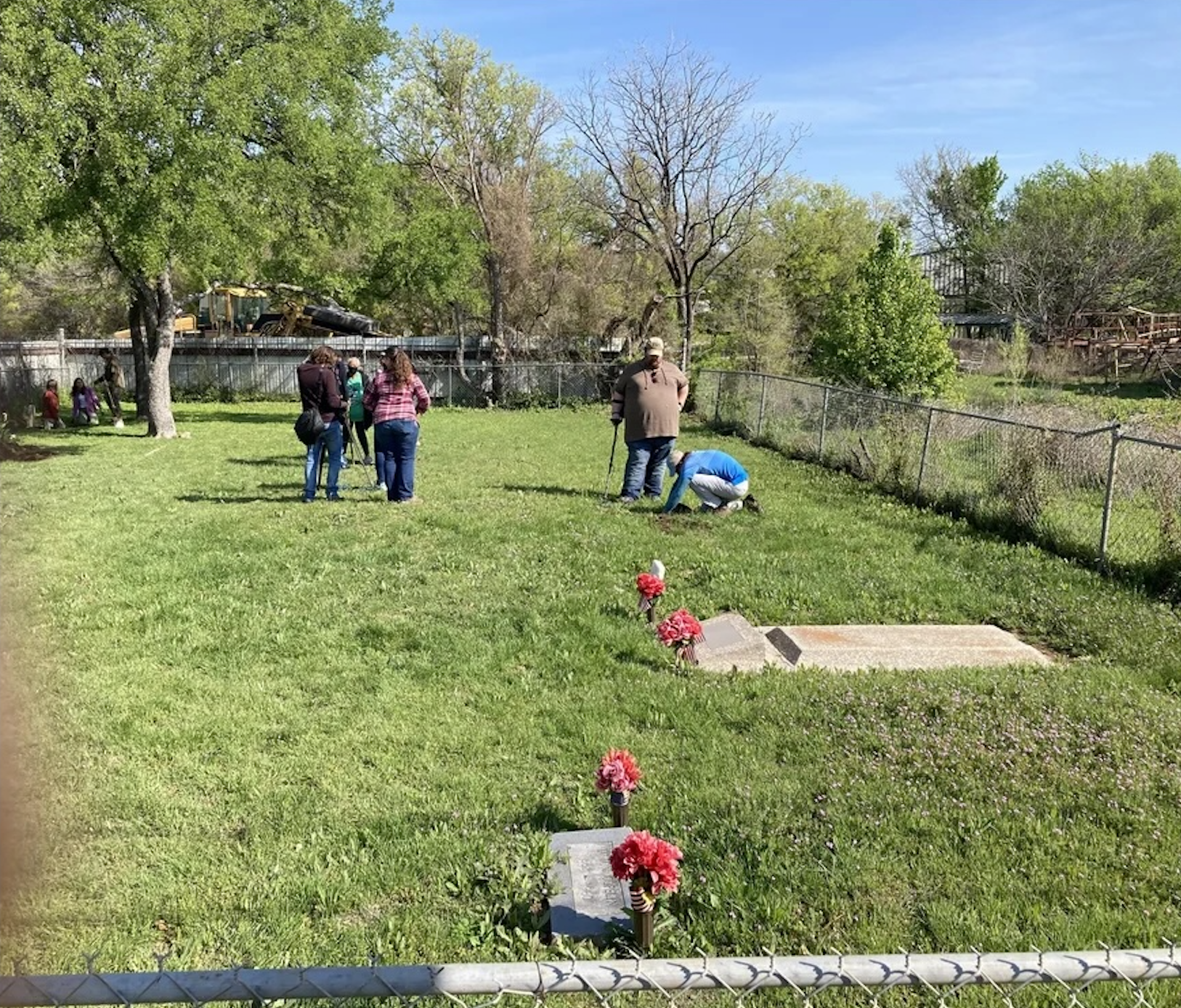
The Oak Grove Colored Cemetery is located on the US 380 Bypass and Texas 16 in Graham, Texas. The land for the cemetery was donated by Addie Graham on May 7, 1921. It was deed by Addie Graham for the specific purpose of burying colored people. It was known to be the colored section of Oak Grove Cemetery ( a public cemetery owned by the city of Graham) within the city of Graham, Texas. The first known burial was in 1929. The most recent and the last burial was 1971. The name of the cemetery was unofficially changed to separate it from the predominately white cemetery.
In July 2023, Rev. Vanessa A. Sims, began looking for her sister's grave. During her search for her sister, she found the cemetery to be overgrown, city and county officials denied ownership of cemetery land, no survey existed, a drainage easement had been placed on cemetery grounds, cemetery land had been taken to install 3 lanes of the US 380 bypass, a fence had been installed to shorten the cemetery, and sections of the cemetery had been sold to 2 private individuals. The African Americans buried in this sacred space had been devalued and neglected by city and county officials. The Texas Historic Commission has approved a Historic Marker/Medallion for the cemetery.
To protect and preserve the cemetery, community member, Rev. Vanessa A. Sims, applied for and was able to obtain a Texas Historic Cemetery designation from the Texas Historic Commission in May 2024.
Dr. Walter and the Texas Tech Archeology team will continue the archaeological investigation of the cemetery on October 12, 2024. In her July 2024 archaeology investigation report entitled "A Place Among the Saints" she writes "Extensive mapping efforts also indicates possible disturbances and encroachments that have negatively impacted the cemetery. Based on multiple oral accounts and a review of historic maps including the right of way map (discussed in an early section of this report), it is highly likely that the construction of Highway 380 and the associated drainage infringed upon the OGC-WPJ Cemetery. Most distressing about this realization, is the real possibility that burials are under the actual roadway."
BCN Contact Information:
Rev. Vanessa Sims

Pleasant Point Cemetery
PLEASANT POINT CEMETERY
FOUNDED: 1880s
ADDITIONAL NAMES: Woodlawn Cemetery
AFFILIATION(S): N/A
HISTORY:
Pleasant Point Cemetery, also known as Woodlawn, is located approximately 50 miles southwest of Jacksonville, Florida, on the west side of the St. Johns River, just outside Green Cove Springs. It lies off County Road 209 (30.16592 N, 81.699639 W). The cemetery covers an area of 1.4 acres.
Currently, 15 monuments are visible as restoration continues, with hopes of completion by Christmas 2025. When the project began in October 2024, only six individuals had been identified as being buried at Pleasant Point. Today, 40 individuals have been identified, with records available on Find a Grave.
Founded in the 1880s, the cemetery served the community of Magnolia, a free Black settlement. In the 1850s, Magnolia became a stronghold for Northern abolitionists and was later occupied by Union troops during the Civil War. After the war, the Magnolia Springs Hotel temporarily housed the Freedmen’s Bureau and an orphanage for Black children.
The land itself has a longer history: originally part of British Governor Patrick Tonyn’s 1,000-acre indigo plantation, it was granted to Thomas Travers in 1789 through a Spanish land grant.
Those laid to rest at Pleasant Point include members of the Forrester family, the first free Black family in Clay County, Florida, as well as Pizel Robinson and Mary Ambrose Robinson, great-grandparents of renowned entertainer Patti LaBelle. Civil War veteran George Forrester is interred there, along with three other veterans. Many others buried in the cemetery were prominent members of the community, including several Freemasons.
Pleasant Point Cemetery stands today as the last surviving link to a once-thriving community that endured the Civil War, Reconstruction, and decades of oppression.
BCN Contact Information:
Steve Griffith
ussgriffy@gmail.com

Washington Park Cemetery
WASHINGTON PARK CEMETERY
FOUNDED: 1920
ADDITONAL NAMES: N/A
AFFILIATION(S): Ancestral Landmark Preservation Council
HISTORY:
Washington Park Cemetery is located in the suburb of Berkeley, Missouri, in St. Louis County founded in 1920 specifically for the final resting place of African Americans. The cemetery is one of the largest Black cemeteries and once most beautiful. Washington Park Cemetery was never just a cemetery, it was a vital part of the African American community. The cemetery sponsored annual events such festivals, food distributions and contained fruit orchards. Like many other Black cemeteries in America Washington Park has suffered from neglect, abuse and mismanagement. Local interstate 70 in the 1950's, invaded the cemetery by plowing through the middle, which separated Washington Park into 2 parts; the loss of acreage due to airport expansion in the 1970's; the intrusion of the local Metro light rail system into the cemetery in 1990, which resulted in the forced (eminent domain) removal of thousands and thousands of our Black ancestor's remains. Some of the staff hired to work on this removal project mishandled, abused, disrespected and stole human remains. The cemetery has been encroached by a cell phone tower and 6 lighted billboards located inside of cemetery in that towered directly above graves. The billboards created a battle in 2017 between the Washington Park Cemetery - Anti-Desecration League (activists), the billboard company and it's advertisers resulting in a lawsuit being filed in April 2019 for the permanent eradication of the billboards. This lawsuit and battle appeared in national and local media. In July 2020, a settlement was reached and the billboards and structures were permanently removed from the cemetery in August of 2020. The fight remains to preserve and restore Washington Park Cemetery to its glorious and rightful place and hold its significance into the future.
BCN Contact Information:
Ancestral Landmarks Preservation Council | Washington Park Cemetery Anti-Desecration League
wpcadlstl@gmail.com

Sunset Memorial Cemetery
SUNSET MEMORIAL CEMETERY
FOUNDED: 1917
ADDITONAL NAMES: N/A
AFFILIATION(S):
City of Jacksonville (COJ) Parks and Recreation Department
COJ Public Works Department
HISTORY:
Sunset Memorial Cemetery is an historic African American Cemetery in the northwest part of Duval County, Florida. Sunset Memorial Cemetery is surrounded by commercial uses along Edgewood Avenue West, Memorial Cemetery directly across Moncrief Road and a mixture of commercial, residential and institutional uses to the north. The cemetery was established in 1917 by the Memorial Cemetery Association, although it was never platted and may have been used for burials as early as 1909. The cemetery is affiliated with the Afro American Life Insurance Company, which was instrumental in fulfilling an unmet need of additional burial options for Jacksonville’s black community. The cemetery is a total of 6.25 acres in size and contains 1,125 grave markers, and it was used for burials up until the late 1990s, with the last recorded burial in 1997.
The African-Americans buried at Sunset Memorial were predominantly middle class and working class citizens, although prominent black citizens, including Abraham Lincoln Lewis, founder of the Afro American Life Insurance Company, are also buried here. The most common monuments and markers found at the cemetery include headstones of various styles (499), flat lid and curved vault lids (71), variations of pillows stones (66) and ground tablets (38). Two prominent mausoleums, the Craddock and Langley mausoleums, are situated near the main entrance of the cemetery. Other styles which are found in much less number, include bedstead, bedstead pillow, footstones and funeral plaques. Materials include predominately marble (335), concrete (235) and granite (85). There are 233 military graves including three piles of military headstones never placed. Several additional unmarked graves are also present at the cemetery due to weathering, deterioration, neglect, and vandalism that has taken place over time, although a precise number of these unmarked graves is not known.
BCN Contact Information:
Andrew Mueller
Archives Specialist, Historic Preservation Section
AMueller@coj.net

Old Mt. Herman Cemetery
OLD MT. HERMAN CEMETERY
FOUNDED: 1880
ADDITONAL NAMES: N/A
AFFILIATION(S):
City of Jacksonville (COJ) Parks and Recreation Department
COJ Public Works Department
HISTORY:
Old Mt. Herman Cemetery is one of the oldest African-American cemeteries in Jacksonville. In the present day only vestiges of the cemetery still exist. Almost all of the grave markers have either deteriorated or have been removed, as the property it lies on was converted into a community park and center (Emmett Reed Center) in the late1960s. The cemetery was developed as a plot about the size of 12.5 acres around 1880 to serve the growing black population of LaVilla, Brooklyn, New Town, and Durkeeville, Jacksonville suburbs located just north and west of the city core where many of the emancipated enslaved first settled following the Civil War. Old Mt. Herman cemetery served as the primary local cemetery for African-Americans until the first decade of the 20th century, when additional cemeteries in the areas of Moncrief Road and Edgewood Avenue were established.
Due to inconsistent record-keeping, poor maintenance and preservation, and the conversion of the cemetery into a park and community center, the total number buried at Old Mt. Herman cemetery is unknown, with even an estimation being difficult to make. One well-preserved marker and monument lies on the sidewalk at the perimeter of the park. The marker belongs to Thompson Williams, a black man who reportedly gave his own life in October 1908 protecting the honor and dignity of a white woman. An 1898 Florida Times-Union index lists a total of 113 in that year that were buried at the cemetery. The 1899 Florida Times-Union lists only 18 buried that year. The cemetery discontinued being used for burials at some point in the early to mid 20th century, and the lot became overgrown with weeds and suffered from years of neglect. The development of the Emmett Reed Center, ironically, uncovered many of the still existing headstones. However, almost of these were removed in order to develop the community center and park grounds. One notable exception that was left undisturbed is the Fagins family lot at the southeast corner of the park. Fragments of other markers are scattered around the park and community center in the less frequented areas.
BCN Contact Information:
Andrew Mueller
Archives Specialist, Historic Preservation Section
AMueller@coj.net

Pine Street African Burial Ground
PINE STREET AFRICAN BURIAL GROUND
FOUNDED: 1750
ADDITONAL NAMES: N/A
AFFILIATION(S):
Harambee Kingston NY, Inc.
HISTORY:
The Pine Street African Burial Ground (PSABG) is an historic site that since its closing in mid-1800's did not receive official acknowledgment or respect prior to its purchase and protection in 2019 through the partnership of Harambee Kingston NY, Inc, the Kingston Land Trust, Inc. and in collaboration with Scenic Hudson. The Pine Street African Burial Ground is located at 157 Pine Street, Kingston, NY 12414. Kingston, NY was the original Capital of New York State prior to moving the Capital to Albany, NY. The History of the Pine Street African Burial Ground dates back to 1750 when the trustees of Kingston identified and area outside the walled settlement of Kingston (formally Wiltwyck) to be used as a "burial ground" for enslaved Africans and freed African Americans. Enslaved Africans and freed African American are historically noted in the Historical archives of Kingston, NY. Harambee Kingston NY, Inc. is the owner and steward of this sacred site. Prior to acquiring the right of ownership, the "burial ground" did not have any above round markers or headstones and had been used as an lumberyard and eventually a residential property with the unmarked "burial ground" as a residential backyard. Beginning in 2022, Harambee Kingston NY in partnership with SUNY New Paltz department of Archaeology has conducted 3 excavations to confirm the burial of over 23 humans remains so far.
BCN Contact Information:
Harambee Kingston NY, Inc.
info@harambeekingstonny.org

Lake Maude Cemetery
LAKE MAUDE CEMETERY
FOUNDED: 1924
ADDITONAL NAMES: N/A
AFFILIATION(S):
Florence Villa Community Association (FVCA)
HISTORY:
Lake Maude Cemetery (LMC) is the oldest African American burial grounds in Winter Haven, FL. Local historic figures as well as common folk have been laid to rest in the cemetery. The grounds are in need of locating and identification of unmarked gravesites; cleaning and repair of tombstones and other grave coverings/ markings; and, clearing top soil and brush to reveal grave sites. Records suggest that some human remains were laid to rest in cemetery driveways once the cemetery plots were exhausted. The impact of FVCA (Florence Villa Comm Assoc) commitment to revitalize the cemetery is far reaching as citizens of Winter Haven and those from afar will be able to visit marked graves of those long passed on. The burial grounds will be transformed from an eye sore to a place of solace.
BCN Contact Information:
Robert Frazier
fvcainc2016@gmail.com

Thomas Smith Cemetery
THOMAS SMITH CEMETERY
FOUNDED: 1902
ADDITONAL NAMES: N/A
AFFILIATION(S):
Muscogee Creek Indian Freedmen Band
HISTORY:
The Thomas Smith Cemetery is a Creek Freedmen cemetery that originated in 1902 when its namesake, Thomas Smith, donated the land as a cemetery. It is in the northwest section of Wagoner County, approximately one and a half miles east of the Tulsa County line, and approximately 1.33 miles from two Creek Turnpike entrances to the east. The cemetery lies north of the City of Broken Arrow city limits and roughly seven miles from downtown Broken Arrow. The Thomas Smith Cemetery’s historic period of significance is from circa 1902 to1974. As an active cemetery, this period reflects its origination as a cemetery for the surrounding community to the fifty-year threshold for the National Register of Historic Places as an active Muscogee (Creek) Freedmen Cemetery.
BCN Contact Information:
Rhonda Grayson

Old Agency Cemetery
OLD AGENCY CEMETERY
FOUNDED: 1858
ADDITONAL NAMES: Union Agency
AFFILIATION(S):
Muscogee Creek Indian Freedmen Band
HISTORY:
The cemetery contains the remains of African Creek people who were part of the force removal to Indian Territory in the 1830's and who were enslaved by the Muscogee Creek Nation Tribe. In 1866 these people were freed by the Treaty of 1866 and went on to be prominent citizens of the Muscogee Nation.
BCN Contact Information:
Rhonda Grayson
mcifb@1866creekfreedmen.com

Old Duval Colored Cemetery
OLD DUVAL COLORED CEMETERY
FOUNDED: 1869
ADDITONAL NAMES: Old Duval Cemetery, Freedmen Cemetery
AFFILIATION(S):
City of Jacksonville (COJ) Parks and Recreation Department
COJ Public Works Department
HISTORY:
The Old Duval Colored Cemetery (Freedmen Cemetery) was established in 1869 for African American burials. The cemetery was developed as a two-acre expansion in the northern section of Old City Cemetery, which first opened in 1852. Before the opening of the Evergreen Cemetery in 1881 and the Memorial Cemetery in 1911, this cemetery was the primary one of choice for prominent African American families. The Old Duval Cemetery continued to be used for burials until the 1980s. A total of 426 burials in the cemetery have been recorded; however, record-keeping throughout the Old City Cemetery has not consistently been maintained over the years and the total number of African Americans buried on the grounds is perceived to be higher.
Laura Adorkor Kofey (1893-1928), who was an African princess, is one of only two individuals buried in the Old City Cemetery that are recognized as having achieved outstanding importance to the community, state or nation, but not represented appropriately by other structures or sites either locally or in other parts of Florida. Princess Kofey became a leader in the Pan African movement which sought to establish economic and diplomatic ties among all people from the African diaspora. The sole mausoleum in the Old City Cemetery is dedicated to Princess Kofey. Other prominent African-Americans buried throughout the cemetery include nationally renowned humanitarian, Eartha Mary Magdalene White (1876-1974), Sallye Mathis (1912-1982), a school teacher who served on the Jacksonville City Council from 1967-1982, Dr. Alexander Darnes, the first black doctor to practice in Jacksonville, and Edward Latson and Albert W. Price, two of the founders of the Afro American Life Insurance Company. In addition, the graves of fifty African American veterans are dispersed throughout the cemetery. Several of these veterans fought as part of the Union Army during the Civil War.
BCN Contact Information:
Andrew Mueller
Archives Specialist, Historic Preservation Section
AMueller@coj.net

Palm Springs Cemetery
PALM SPRING CEMETERY
FOUNDED: Prior to 1942
ADDITONAL NAMES: Palm Spring Cemetery
AFFILIATION(S):
Cosmo Historical Preservation Corporation
HISTORY:
The Palm Spring Cemetery in Jacksonville, Florida, is locally significant under Criteria A for Ethnic Heritage: Black, Ethnic Heritage: Gullah Geechee, and Early settlement/Exploration. The period of significance extends from circa 1942 to 1970. The cemetery is the best surviving resource associated with the historic Gullah Geechee community of Cosmo. Cosmo was formed after the Civil War, as former enslaved people, many of whom came from the coastal regions and Sea Islands of Georgia and South Carolina, arrived here as homesteaders. It was one of a small number of Gullah communities that lived in relative isolation in the Mill Cove area. The cemetery also functioned as a burial ground for the black communities of Mayport and what is now Jacksonville Beach. Like many African American communities during the era of segregation, the people in Cosmo, Mayport, and the beaches created the Palm Springs Cemetery in part to provide deceased family members with a level of dignity in death they were often denied in life. Although the oldest known marked burial dates to 1942, according to local informants the cemetery is actually older than this.
The full extent of the original cemetery is unknown, as there are no surviving burial records and many of the burials were either unmarked or the headstones either removed, destroyed, or deteriorated. The surrounding site has been heavily impacted by modern development, with suburban homes to the north and south, a former golf course to the east, and a retention pond and Fort Caroline Road to the west. Fencing has gone up around the cemetery. Although there has been no intensive archaeological investigation of the site, there are clear indications of unmarked burials extending past the fence lines.
(Historical Summary provided by Andrew Waber Florida Division of Historical Resources)
During the year of 2020, Paim Springs (Spring) Cemetery was listed on the National Register of Historical places by the United States Department of Interior.
BCN Contact Information:
Leevon White
leevwht@aol.com

African Cemetery No. 2
AFRICAN CEMETERY NO. 2
FOUNDED: 1870
ADDITONAL NAMES: N/A
AFFILIATION(S): N/A
HISTORY:
This is the earliest recorded cemetery in Lexington to be organized, owned, and managed by African Americans. The 8-acre property was purchased in 1869 by Union Benevolent Society No. 2 (from which the cemetery gets its name) and the cemetery was chartered in 1870; burials continued until 1976. The people here were important leaders in Lexington. The cemetery uniquely honors individuals significant in the history of Thoroughbred Racing. Oliver Lewis, the first winner of the Kentucky Derby is buried here and it was the original burial site for the 3-time KY Derby-winning jockey Isaac Murphy. There over 150 members of the USCT including three individuals who were members of the 54th and 55th Massachusetts Regiments.
Like many private cemeteries African Cemetery No. 2 was not endowed and with the death of its founding members the cemetery became urban wasteland - it was declared abandoned on April 17, 1973. City government claimed ownership and surveyed graves in the cemetery in 1973 in anticipation of planned development; the revelation of over 5000 burial sites precluded that use. In March 1979, the Rev. H. Greene organized a nonprofit group as African Cemetery No. 2 Inc. to reclaim the landscape. The cemetery was cleaned and restored in 1980 and African Cemetery No. 2 Inc. was deeded the property in May 1981. The nonprofit was reorganized in 1995 and restoration, historic preservation, and cultural activities have continued since. The site was listed on the National Register of Historic Places in 2004. It is the home of Lexington’s longest running Juneteenth Celebration (since 2005).
BCN Contact Information:
Mark Coyne
mscoyn00@gmail.com